A Match Ticket Worth Keeping: Making a Small Cricket Keepsake
A cricket match ticket keepsake can bring one particular afternoon back. Choose the right ticket, record its story, and store or display it with care.
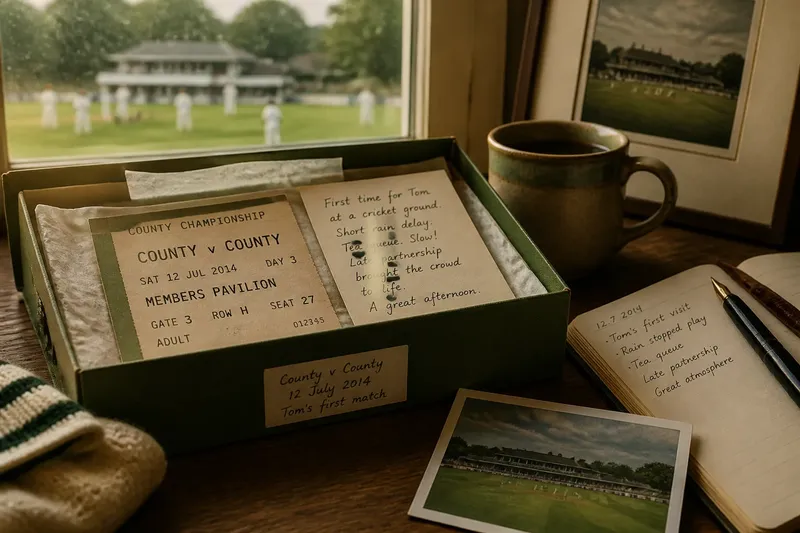
Which cricket ticket is worth keeping? Usually, it is the one that brings back a particular afternoon, not the one that looks rare. A cricket match ticket keepsake might be a paper stub, a printed admission slip, or a saved digital ticket. The useful question is what it helps you remember and how to keep that reminder legible.
Imagine you attend a county match with a friend who has never been to a ground before. It rains briefly, the tea queue moves slowly, and a late partnership gives the afternoon its shape. At the gate, you receive a small printed ticket. You decide to keep that one rather than every ticket from the season. It has a particular place in your memory and a manageable plan for storage.
Choose the ticket tied to a particular day
Start with the memory, then choose the object. A ticket may matter because it marks a first visit, a family outing, a club celebration, or the day you watched a particular player from the boundary. The match need not have been historic. A modest afternoon can mean more to you than a famous fixture seen from a distant seat.
In the imagined county-match visit, the ticket connects to the friend’s first time at a ground. That makes it the natural choice. The ticket does not explain the rain or the partnership, so those details belong in a separate note rather than on the paper itself.
Look at what is printed: perhaps the ground, fixture, date, gate or stand, and admission category. A clear fixture line can anchor a memory; a partly faded ticket may still be the right choice if its personal connection is stronger. Do not keep one merely because its design seems old or unusual. That is a collecting question, and a keepsake has a different job.
Record the memory beside the paper
Tickets rarely hold all the details you may want to recall later. Write a separate note while the day is still easy to describe. Use a small piece of paper and a suitable writing tool, following the paper or pen maker’s guidance if the materials are unfamiliar. Do not write on the ticket itself, especially if its surface is coated, thermal, brittle, or already marked.
For the imagined visit, the note says that the friend had never seen a match in person, rain interrupted play, and the crowd followed the late partnership with growing attention. Plain wording is enough. A record of the day need not sound like a commemorative plaque commissioned by a committee.
Keep the note beside the ticket without fastening the two together. Avoid staples, clips, tape, or adhesive on the keepsake; if you are unsure how a particular material may react, leave it separate and ask a paper conservator for advice. A folder with separate sections can keep the items associated without making them one object.
Store the ticket in a stable place
Choose a folder or enclosure intended for preserving paper, and follow its maker’s instructions. Keep the ticket flat and supported in a dry place away from direct sunlight and sources of heat or damp. A drawer in a dry room is generally a more sensible location than a windowsill, kitchen shelf, or the glove compartment where it spent the journey home.
If the ticket is glossy, thermal, laminated, or printed on unusual stock, do not assume that any sleeve or writing tool is suitable. Follow the ticket supplier’s or preservation product maker’s directions. If those directions are unavailable and the ticket seems fragile or valuable to you, consult a qualified paper conservator rather than trying a coating, cleaning product, or repair.
In the imagined case, the owner checks the enclosure’s instructions, places the ticket inside without forcing it, and stores the separate note alongside it. A label on the folder identifies the match and the friend’s first visit, so the keepsake can be found without repeated handling. This is storage, not a shrine; the drawer need not be lined in club colors.
Display a copy if the original needs protection
A ticket can be shown without leaving it exposed to bright light. If you frame the original, choose a method intended for paper preservation and follow the framer’s guidance about mounting and materials. Keep the frame out of direct sun and away from heat or damp. If the ticket is fragile or fading, a printed copy is a simpler way to enjoy its appearance while the original stays stored.
For the imagined keepsake, the owner decides not to frame the original. Instead, a printed copy goes on a shelf beside a photograph of the ground. The original remains with the note in its enclosure. That choice preserves a view of the memory without asking a thin ticket to withstand years of light and handling.
It is not worth adding a ball, scorecard, program, photograph, and handwritten account unless each item contributes something distinct. A small keepsake works because its parts are easy to understand. Too many related objects can turn a personal reminder into a storage problem with an admission policy.
What should you do with a cricket ticket?
Should you keep a paper ticket or a digital one?
Keep the form tied to the visit that you can preserve meaningfully. For a digital ticket, save the original file and a readable image in a clearly named folder, and keep any printed copy with a note about the occasion.
Is a ticket worth keeping if the print is fading?
It can still matter if the memory is clear, but avoid cleaning, coating, or trying to restore the print yourself. Store it according to the enclosure maker’s directions and record the match details separately while they are known.
Can you write on the back of a ticket?
A separate note is the safer choice, particularly if the ticket is coated, thermal, brittle, or already marked. It adds context without changing the original.
Should the ticket be framed?
Frame it only if you can use materials and mounting methods intended for paper preservation and keep it away from direct light, heat, and damp. Otherwise, a copy on display and the original in a labeled folder make a straightforward arrangement.
Choose what earns a place in the folder
The imagined ticket has a clear role: it identifies the match, while the note records why that afternoon mattered. A copy can be displayed; the original can remain protected and easy to find. Its personal worth does not depend on market value.
When another match ends, pause before adding its ticket to the folder. Ask whether it recalls a distinct occasion or merely repeats information already recorded elsewhere. If it marks a day you will want to revisit, keep it with a short note and an enclosure suited to its material. If not, there is no obligation to build an archive out of every gate entry. A cricket match ticket keepsake is most useful when you can still say, plainly, why this one stayed.