Willow or Composite? What a Bat Material Changes
Compare a willow or composite cricket bat by grain, edges, seams, and finish, then choose a display piece that fits its setting without mistaking looks for performance.
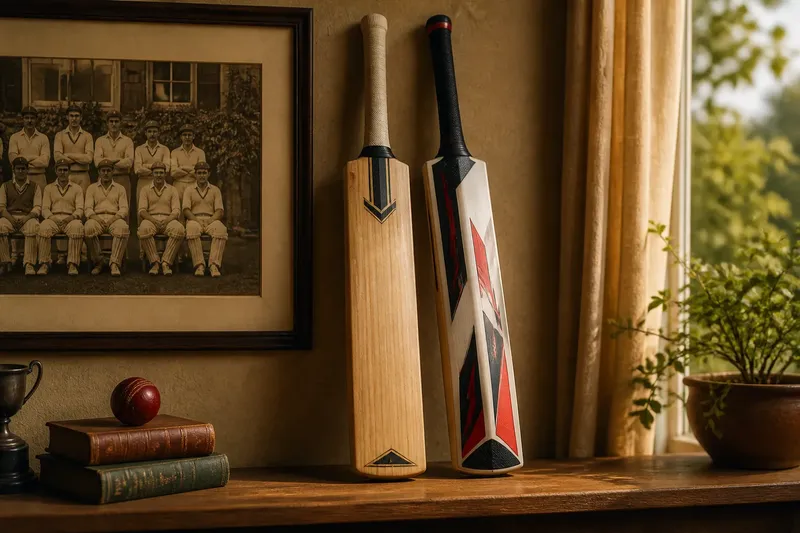
Willow or composite cricket bat: which one belongs beside your club photograph, and what should you inspect before choosing? A willow or composite cricket bat differs in visible grain, surface, and construction, so the right choice starts with what the object actually shows.
Willow grain gives the blade a natural pattern
A traditional cricket bat is made from willow, commonly English willow or Kashmir willow. Its broad face often shows long, pale lines running from shoulder toward toe. These lines are the wood’s grain, not a printed pattern, and their spacing and contrast vary from bat to bat.
Distinct, regular lines can make the face look orderly; irregular grain gives it a less uniform appearance. Neither pattern, by itself, tells you the whole story of the bat. Willow also varies in color, from creamy pale areas to warmer, darker tones.
Inspect the edges and toe as well as the face. The wood’s color and texture may continue around the blade, while the curve from face to edge reveals how the surface catches light. A clear protective facing or coating can soften the grain without hiding it completely.
Composite construction can make its joins visible
“Composite” describes designs that use more than one material or combine materials differently from a conventional willow blade. The term does not identify one fixed construction. Depending on the bat, you may see molded surfaces, synthetic layers, bonded components, or a uniform finish.
Some composite surfaces look smooth and consistent. Others show seams, layered edges, contrasting materials, or molded details. These features make construction part of the design: the bat can read as a deliberately assembled object rather than a single piece of wood.
Willow tends to foreground natural variation; composite designs may foreground finish and assembly. That is a visual distinction, not a claim about durability, legality, or performance. If permitted use matters, check the specific bat’s label and manufacturer information, then consult the relevant competition rules.
Finish and graphics affect what you notice
Material is only part of the view. A willow bat may have a natural-looking face, a clear coating, colored decals, or a grip that draws attention away from the blade. Composite models may use printed graphics, molded textures, or contrasting colors.
A large, bright decal can dominate a bat’s face and make the grain seem secondary. A restrained design leaves more of the surface visible. The handle, splice, and toe also help you read the object because they show where components meet.
Compare bats in ordinary light and from more than one angle. Strong shop lighting can flatten texture or exaggerate gloss. A slight turn may reveal whether the surface is naturally varied, coated, molded, or assembled from visible layers.
Check the details before choosing a display bat
- Check the face for long, irregular grain lines. If they are clear and you want a natural wood appearance, choose that willow bat; if the face is uniform, consider a different willow face or a composite design.
- Check the edge and toe for material that looks continuous with the face. If the wood appearance carries around the blade, choose it for a traditional display; if distinct layers or seams show, choose the bat when an assembled, contemporary look is the goal.
- Check the surface under ordinary light by turning the bat slightly. If the finish still shows the texture you want, keep it on the shortlist; if glare hides the detail, compare another finish or view it in softer light.
- Check the size and placement of decals against the blade. If the graphics overwhelm the grain or construction, choose a quieter design; if you want a strong graphic focal point, keep the bold label and let it lead the display.
- Check the handle, splice, and toe for visible transitions. If their colors and materials fit the face, choose the bat as a coherent object; if they clash with the display, compare another color scheme or grip.
- Check the maker’s material description when the surface could be printed or coated to imitate wood. If the description confirms the material you want, choose on that basis; if it remains unclear, ask the seller or select a clearly labeled alternative.
Say you have a framed club photograph with sepia tones and a narrow shelf beside it. Imagine two hypothetical bats: one has a pale willow face with visible grain, a plain grip, and small dark decals; the other has a smooth composite face with bright graphics. First, compare the faces in the room’s ordinary light; the willow grain remains visible while the composite face reads as a solid graphic shape. Next, check the edges and labels; the first appears wood-like around the blade, while the second has a uniform manufactured finish. The resulting choice is the willow bat for a quieter visual connection to the photograph. If the shelf instead held modern equipment against a clean, bright wall, the composite bat would likely make the more coherent display. Neither choice says anything about playing quality.
What do readers ask about willow and composite bats?
Does visible grain prove the bat is willow?
Natural-looking grain is a useful visual clue, but coatings and printed patterns can complicate appearances. Check the material description rather than relying on the face alone.
Can a composite bat have a wood-like finish?
Some finishes can imitate wood color or grain. Inspect the edges and visible joins, then compare what you see with the maker’s description.
Does a smoother surface mean better quality?
No. Smoothness describes a finish, not a complete assessment of the bat. Decide whether that surface suits your eye and keep practical judgments separate from visual preference.
Which material is easier to identify at a glance?
A willow face with clear natural grain is often recognizable, while composite construction varies in appearance. If a surface is coated or heavily decorated, the label may be more informative than a quick look.
Choose for the appearance you want
It is not worth inferring playing qualities from grain, gloss, or a dramatic graphic. Those clues describe what you can see; they do not replace a proper fit or the maker’s information.
For a traditional appearance, look for visible willow grain, a wood-colored face, and edges that read as continuous with the blade. For a more contemporary appearance, notice uniform finishes, molded details, exposed joins, or layered construction. If the material is still uncertain, the maker’s description is more useful than guessing from a glossy face.
When choosing a willow or composite cricket bat as an object, check its face, edges, finish, graphics, and material label in the light where it will be displayed. That small inspection helps you choose a bat that belongs in its setting without asking appearance to answer questions about performance.